


A Complete Guide to the
Venice Beach Boardwalk
Few places in the world match the Venice Beach Boardwalk for sheer spectacle. On any given day, you’ll find a bodybuilder chalking their hands at Muscle Beach, a skateboarder threading a perfect line through the concrete bowls, and a saxophonist playing for tips beside a living statue. It’s chaotic, creative, free-spirited, and completely unlike anywhere else in Los Angeles.
At Hotel Erwin, we don’t just have a front-row seat to this iconic energy—we’re right in the heart of it. Whether you’re watching the canvas of the Pacific from your balcony or soaking it in from our rooftop, here is your insider guide to experiencing the best of the boardwalk.


A Little History
Long before the tech crowds and trendy cafes arrived, Venice was built on a wild idea. In 1905, eccentric millionaire Abbot Kinney dug a series of canals into the marshlands, hoping to bring a slice of Italian romanticism to Southern California. The gondolas are mostly gone now, but the neighborhood’s talent for high-concept weirdness stuck around. By the time the 1970s rolled in, the paved-over paradise became the epicenter of a global revolution. Local kids known as the Z-Boys took the smooth, aggressive style of Venice surfing and brought it onto concrete wheels—forever changing skate culture. That lineage of raw self-expression is baked into everything you see on the boardwalk today. We don’t just respect Venice’s history; we live in it.
What Is the Venice Beach Boardwalk?
What is the Venice Beach Boardwalk? Officially, it’s named Ocean Front Walk—a two-mile stretch of coastal concrete running parallel to the Pacific. And no, despite the name, there isn’t a single wooden plank in sight. The nickname stuck over a century ago, and in true Venice fashion, no one ever bothered to correct it.
On one side, you’ve got the classic California postcard: sun-baked sand, beach volleyball courts, and crashing waves. On the other, you have a dense, unapologetic wall of counter-culture—a sprawling strip of open-air tattoo parlors, heavy-bass surf shops, classic slice joints, and vendor stalls.
The vendor stalls are what separate Venice from any corporate beach town on Earth. These aren’t temporary weekend pop-ups; they are permanent neighborhood fixtures occupied by local artists, eccentric craftspeople, and generational characters who have held down their real estate for decades. Walking past them means dodging a sensory overload of original oil paintings hung salon-style, the smell of hand-rolled incense, custom jewelry being chiseled on the spot, and bizarre, beautiful artwork that completely defies description. The locals selling them usually have stories far better than the art itself.

What to Shop and See on the Venice Beach Boardwalk
The Venice Beach Boardwalk is as much an open-air marketplace as it is a place to people-watch. Along Ocean Front Walk, you’ll find local artists’ stalls, independent boardwalk vendors, skate shops, and other small businesses that reflect the neighborhood’s creative, anything-goes personality. It’s not the polished shopping experience you’ll find at a traditional outdoor mall. The appeal is the variety, the local character, and the chance to discover something unexpected.
Art is a major part of the experience. Browse paintings, photography, handmade goods, jewelry, clothing, and other work from independent artists and makers. You’ll also find vendors selling souvenirs and California-inspired goods, alongside businesses connected to Venice’s longstanding surf and skate culture.
For travelers interested in Venice beyond the postcard version, this is where local immersion really happens. Take your time, talk with vendors, watch artists at work, and let the boardwalk’s skate-culture identity and creative energy unfold around you. There is no single itinerary for exploring Ocean Front Walk, which is exactly what makes it feel like Venice.
Shop the Venice Beach Boardwalk: Skate, Art, Vintage & Local Finds
Venice Skateboarding Stuff — A family-owned boardwalk skate shop carrying complete skateboards, components, protective gear, and skate apparel. Visit Venice CA
Boardwalk Skate & Surf — A longtime Ocean Front Walk shop offering skate and surf gear alongside bike, skate, and beach rentals. Visit Venice CA
Seven Jewels — A boardwalk stop for Venice-themed apparel, souvenirs, and custom-printed T-shirts, hoodies, and sweatshirts.
Titanic Boutique — A colorful Ocean Front Walk boutique known for hats, gifts, and beach-inspired finds.
Heads Up Hat Shop — A dedicated boardwalk hat shop offering a wide range of caps and personalized options.
Native American World ~ Indigenous — A specialty shop featuring Indigenous arts and crafts, jewelry, apparel, music-related items, and gifts.
Boardwalk Vintage — A small vintage shop with secondhand clothing, jewelry, posters, records, and ’80s/’90s-inspired finds.
Venice Liberty — A boardwalk clothing and gift shop specializing in Venice Beach and California-themed graphic apparel.
J’s Rentals — A longtime boardwalk shop where visitors can rent bikes, skateboards, surf equipment, and other beach gear. Visit Venice CA
Castanea Sicilian Cafe Venice Beach — A boardwalk café and bakery serving Sicilian-inspired food, pastries, gelato, and coffee, making it an easy stop while browsing Ocean Front Walk.
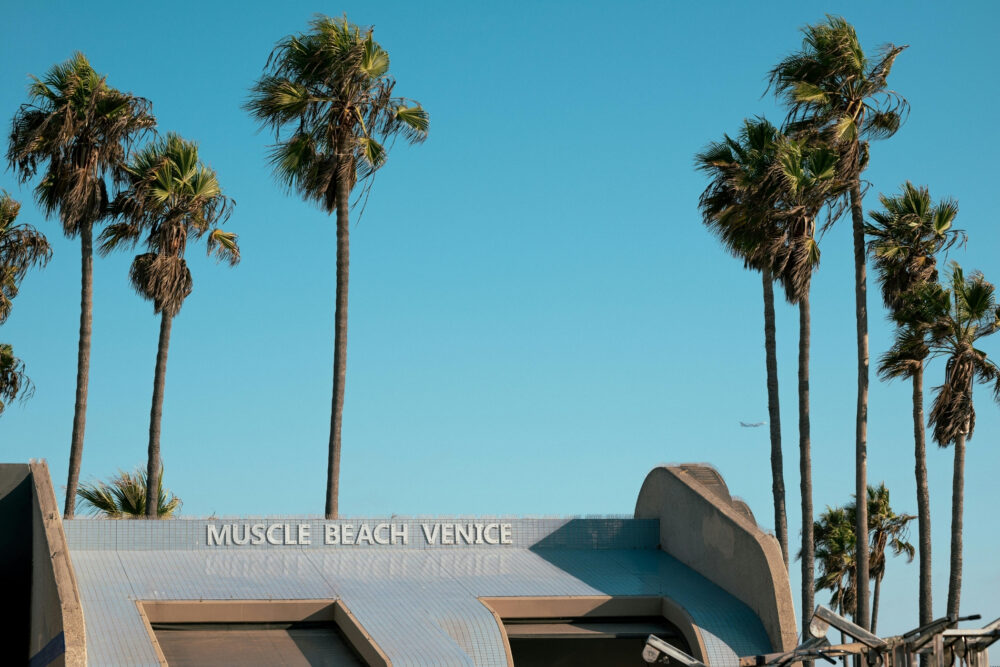
THE ORIGINAL MECCA OF IRON
Muscle Beach: The World's Heaviest Spectacle
About two blocks north of Venice Boulevard sits the most famous patch of concrete in bodybuilding history. Muscle Beach Venice has been a neighborhood fixture since the 1950s, back when fitness pioneers first started lifting heavy metal under the raw California sky. This is the exact spot where legends like Jack LaLanne, Franco Columbu, and Arnold Schwarzenegger built their physiques and cemented the West Coast fitness revolution.
Today, it isn’t just a historical landmark—it’s a fully functioning, gritty public gym. For a $10 day-use fee, anyone can walk inside the gated bullpen and test their strength on the same old-school platforms, heavy rings, and massive free weights that made this place famous.

THE EPICENTER OF STREET CULTURE
Venice Beach Skatepark: Concrete, Chaos, and Vertical Air
Just steps from the sand sits 16,000 square feet of legendary sunken concrete. While this current state-of-the-art park opened its gates in 2009, skate culture has been bleeding into this exact patch of ground for more than half a century. Featuring a relentless street course, massive snake runs, and deep concrete bowls, this park is a magnet for the heaviest hitters in Los Angeles and visiting pros from every corner of the globe.
As a spectator, this is the most dynamic free show on the coast. Stand by the rails, feel the rumble of wheels on raw concrete, and watch the next generation of skate royalty throw down lines you have to see to believe.

THE MARQUEE OF THE REBELLION
The Venice Sign: A Century of Neon In The Center Of It All
Spanning Windward Avenue just off the boardwalk, the arched, glowing “Venice” sign is the undisputed visual heart of the neighborhood. As the most photographed spot on the Westside, this neon icon marks the exact coordinates of what was once the grand, column-lined entrance to Abbot Kinney’s 1905 beachside resort.
If you look down at the asphalt beneath it, you’re looking at history. The busy intersection just ahead—Windward Circle—actually sits directly on top of what was once the resort’s massive saltwater lagoon where Italian gondolas used to float.
Today, it serves a dual purpose: it’s the ultimate backdrop for your mandatory “I made it to Venice” photo, and it functions as a highly useful orientation point for navigating the madness. Best of all? Hotel Erwin is sitting pretty less than two blocks away. Use the neon as your north star, snap your shot, and head back to the hotel for a rooftop drink when you’re done.

A COZY DETOUR OFF THE BEATEN PATH
The Venice Beach Canals: A Serene Escape from the Boardwalk Chaos
Just three blocks inland from the concrete roar of the boardwalk sits a hidden labyrinth that feels entirely decoupled from the rest of Los Angeles. The Venice Canals Historic District is a quiet network of narrow waterways, romantic footbridges, hidden garden paths, and eclectic architectural homes. It is thoroughly residential, intensely peaceful, and the ultimate antidote to the beautiful madness of the beachfront.
Located an easy, 20-minute stroll from Hotel Erwin, the canals are best experienced when the day slows down—either under the crisp light of an early morning or during the golden glow of a late afternoon. Here, the sensory overload of Venice completely shifts. It’s a genuinely serene pocket of neighborhood history, offering a rare moment to take a deep breath and see exactly what Abbot Kinney had in mind over a century ago.

THE EDGE OF THE WEST COAST
The Venice Pier: Panoramic Views and Ocean Air
Jutting 1,310 feet out into the crashing surf, the Venice Pier anchors the south end of the boardwalk and pushes you straight into the Pacific. Unlike its commercialized neighbor up the coast in Santa Monica, this concrete pier drops the carnival rides and souvenir shops in favor of raw, unadulterated ocean views and a relaxed, old-school coastal pace.
It’s a massive hub for local anglers—fishing is fully permitted and highly popular out here at the edge of the horizon—but the real reason to make the trek to the end is the jaw-dropping perspective looking back toward the shore.
Things to Do
Walk the Whole Length
The simplest thing to do is also one of the best. Walk the full two miles of Ocean Front Walk from one end to the other. Give yourself at least an hour so you can stop, watch the performers, browse the stalls, and catch whatever is happening at the skatepark. Come back the other direction and you’ll notice different things the second time.
Watch the Street Performers
The boardwalk has an informal but consistent roster of performers who work the same stretches most days. You might encounter a magician who has been performing the same spot for 20 years, a band playing original music, a contortionist, a comedian working the passing crowd, or someone doing something genuinely inexplicable. Tipping is customary and appreciated.
Rent a Bike and Ride the Marvin Braude Trail
The Marvin Braude Bike Trail runs 22 miles along the coast, connecting Venice Beach to Santa Monica to the north and Redondo Beach to the south. Bike rentals are available near the boardwalk—Hotel Erwin guests can borrow bikes on-site, or you can rent from vendors along the path. Riding north toward Santa Monica Pier takes about 20 to 30 minutes at a casual pace. The trail is flat, paved, and runs right along the water the entire way.
Take a Surf Lesson
Venice Beach has consistent beginner-friendly waves and several surf schools operating out of the beach. Lessons run approximately 90 minutes and include a wetsuit and a soft-top board. No experience is necessary. The water is cold enough year-round to justify the wetsuit, even in summer.
Browse the Artist Stalls
The vendor stalls are easy to rush past, but they’re worth slowing down for. Many of the artists have been selling from the same spot for years and have built real followings. Original paintings start at very accessible prices. The quality varies, but so does a visit to any gallery. Look for work that surprises you.
Watch Sunset from the Beach
Venice faces almost due west, which means sunsets are unobstructed and often dramatic. From June through September, the marine layer that rolls in each morning typically burns off by early afternoon and gives way to clear golden-hour skies. The stretch of beach in front of the boardwalk fills up with locals who show up specifically for sunset. Find a patch of sand, sit down, and watch.
Watch Sunset from Hotel Erwin’s Rooftop
Kassi Venice Beach, Hotel Erwin’s rooftop bar, offers a panoramic view of the boardwalk and the Pacific from four floors up. It’s the best elevated vantage point on the beach. Cocktails, small bites, and the whole sweep of the coast at golden hour. It’s a good way to transition from a day on the boardwalk to an evening out.

YOUR TICKET TO THE INSIDE TRACK
Stay Close to it All: Hotel Erwin is Your Venice Basecamp
Every single legendary spot on this list is a quick walk, a skate, or a cruiser bike ride away from your room. We aren’t just near the action—we’re Venice Beach’s original boutique hotel, holding down the fort as the only property sitting just steps from both the gritty energy of the Boardwalk and the chic style of Abbot Kinney Blvd.
Grab one of our bikes, cruise down the boulevard, eat incredibly well, browse the local stalls slowly, and make sure you get back up to the roof in time to catch the sky turn orange over the Pacific.
Where to Stay Right on the Venice Beach Boardwalk
Hotel Erwin is Venice Beach’s only locally built boutique hotel on the boardwalk. Created by locals for people who want to experience Venice rather than simply visit it, the hotel puts you directly in the middle of the neighborhood’s creative, laid-back energy.
That locale created by locals philosophy carries through the stay. Rather than choosing a hotel removed from the action, you can step outside and immediately be on Ocean Front Walk, with the beach, skatepark, Muscle Beach, artists, performers, and vendors all within easy reach.
Inside the hotel, private balconies offer another way to experience the location, with select rooms overlooking the ocean and boardwalk. Wake up to the Pacific, watch Venice come alive below, then head out on foot or by bike to explore the neighborhood.
For travelers who care about locally built heritage, staying at Hotel Erwin means being part of the Venice experience rather than simply staying near it.

Rooftop Views Above the Boardwalk: Kassi at Hotel Erwin
For a different perspective on Venice Beach, head upstairs to Kassi, Hotel Erwin’s Greek-inspired Mediterranean rooftop bar. Set above the boardwalk, Kassi looks out across Ocean Front Walk and the Pacific, creating an elevated place to take in the neighborhood without leaving it behind.
The setting is part of what makes the experience distinctly Venice. Below, the boardwalk continues its constant rhythm of skaters, cyclists, artists, performers, and beachgoers, while the ocean stretches toward the horizon.
This is rooftop authenticity rather than a view removed from the neighborhood. You’re still connected to Venice, just several floors above it.

The Dogtown Suite: Skate Culture Meets Boardwalk Views
Venice and skateboarding have been intertwined for generations, and Hotel Erwin’s Dogtown Suite brings that history into the hotel itself. The skate-culture penthouse features a DJ booth and direct views toward the boardwalk, connecting the experience inside the hotel with the skate culture and creative energy outside.
The suite’s identity draws naturally from Venice’s historic skate scene, including the legacy of the Z-Boys and the Dogtown era that helped transform skateboarding from a California pastime into a global culture. For travelers looking for authentic local art and skate immersion, the Dogtown Suite offers a stay that reflects that history rather than simply referencing it.
Its skate-culture identity makes it particularly relevant for visitors who want their accommodations to feel connected to the neighborhood.
Planning Your Venice Beach Stay: What Travelers Should Know
Staying along the Venice Beach Boardwalk makes exploring the neighborhood easy, but a little planning can make the experience smoother.
Parking: If you’re driving, check current Hotel Erwin parking options and rates before arrival. Street parking around Venice can be limited, particularly during busy beach days and weekends.
When to visit: The boardwalk is active throughout the day, but the experience changes as the day progresses. Mornings tend to be quieter, afternoons bring more beach and boardwalk activity, and sunset is one of the most scenic times to be near the water.
Getting around: Much of Venice is walkable from Hotel Erwin, including the boardwalk, Venice Skatepark, Muscle Beach, Venice Sign, and Venice Canals. Bikes are another convenient way to explore the coastline and nearby neighborhoods.
Pets: If you’re traveling with a pet, confirm Hotel Erwin’s current pet policy and any applicable fees or restrictions before booking.
Check-in: Confirm current check-in and check-out times, as well as any identification, deposit, or arrival requirements, before your trip.
Above all, give yourself time to experience Venice without overplanning it. The neighborhood’s locally built heritage is part of what separates it from a generic beach destination. Walk the boardwalk, stop when something catches your attention, explore beyond the main strip, and leave room for the unexpected.
The Venice Beach Boardwalk—officially called Ocean Front Walk—is located along the Pacific coast in Venice, a neighborhood in Los Angeles, California. The main address is 1800 Ocean Front Walk, Venice, CA 90291. Hotel Erwin sits directly on the boardwalk at 1697 Pacific Ave, making it one of the only hotels in the city with immediate boardwalk access.
Yes. The boardwalk is a public promenade and free to walk at any time during operating hours. Individual vendors, skatepark facilities like Muscle Beach (which charges a $10 day-use fee), and restaurants along the boardwalk have their own pricing, but the promenade itself costs nothing to walk.
The Venice Beach Boardwalk and Venice Pier are closed from 2 AM to 5 AM daily. Vendor stalls on the western side of the boardwalk begin opening around 9 AM Shops on the eastern side typically open between 10-11 AM and close around sunset. The beach itself is accessible whenever the boardwalk is open.
Early weekday mornings offer the most peaceful version of the boardwalk—vendors setting up, serious athletes training, fewer crowds. Weekday late afternoons are lively without the weekend peak-season crush. Midday on summer weekends draws the largest crowds. If you’re after the full spectacle—every performer working, the skatepark packed, the full energy of the place—a Saturday afternoon in July or August delivers exactly that.
The boardwalk runs approximately two miles from end to end. A steady walk takes around 30 to 40 minutes. Allow at least an hour to an hour and a half if you want to stop at the skatepark, browse vendor stalls, and watch performers. Many visitors end up spending a full half-day without realizing how much time has passed.
Muscle Beach Venice is an outdoor gym located on the boardwalk approximately two blocks north of Venice Boulevard. It has operated continuously since the 1950s and is considered the birthplace of the outdoor bodybuilding culture that spread globally. The gym features heavy-duty platforms, pull-up bars, rings, and free weights. It’s open to the public for a $10 day-use fee. Even if you don’t plan to exercise, it’s one of the more photogenic and historically significant spots on the boardwalk.
Yes. The Venice Beach Skatepark is free and open daily from 9 AM to sunset. Safety gear, including a helmet, is required to use the park. Rentals are available nearby. The park is open to all skill levels, though some of the bowls and pools are genuinely challenging and best left to experienced skaters.
Yes. Venice Beach has a lifeguarded swimming area. Rip currents occur periodically, particularly during swell events, so observe any flag or posted warnings from lifeguards. The water temperature ranges from roughly 58°F in winter to 70°F in late summer—cool enough that a wetsuit makes most water activities significantly more enjoyable.
Venice Beach is a busy, well-visited public destination. Like any major city beach area, it benefits from basic urban awareness: keep bags secure, be aware of your surroundings, and use common sense with valuables. The boardwalk is busy during the day with both locals and tourists. As with most urban beach destinations, the daytime experience is comfortable and family-friendly.
The Venice Canals are a network of narrow waterways located roughly three blocks inland from the boardwalk. Originally built by Abbot Kinney in 1905 as the defining feature of his Venice of America resort, the canals were mostly paved over in the 1920s but a stretch was preserved and restored in the 1990s. Today the canal district is a quiet, residential neighborhood with footbridges, garden paths, and private homes fronting the water.
The Marvin Braude Bike Trail connects Venice Beach and Santa Monica Pier along the coastline—the ride takes about 20 to 30 minutes at a relaxed pace. Hotel Erwin guests can use bikes available at the hotel. By car, the drive along Lincoln Boulevard or the Pacific Coast Highway takes roughly 10 to 15 minutes depending on traffic.
Yes, particularly during the day. The boardwalk offers a range of experiences that work well for families—the skatepark is compelling to watch even for non-skaters, Muscle Beach is entertaining, the artist stalls are interesting, and the beach itself is excellent for kids. Surf lessons are available for children. The bike path is family-friendly. Families generally find the boardwalk energetic and engaging during daytime hours.
Venice Beach is the only major Los Angeles beach with a fully developed cultural scene running alongside the sand. Santa Monica has the pier and Palisades Park, but its beach is relatively conventional. Malibu is scenic and residential. Manhattan Beach and Hermosa Beach are neighborhood beaches. Venice Beach is the one with the history of counterculture, the outdoor gym, the legacy skatepark, the artist community, the street performers, and the sense that anything might happen on any given afternoon. That combination is genuinely unique.
Kassi is the Greek-inspired Mediterranean rooftop bar atop Hotel Erwin, overlooking the Venice Beach Boardwalk and the Pacific Ocean. It offers rooftop authenticity that reflects the hotel’s local identity — a place to unwind above the boardwalk energy rather than simply beside it.
Hotel Erwin is steps from the Venice Beach Boardwalk — the shops, street artists, and vendors are immediately outside the front entrance. No car, rideshare, or walk of significant distance is required, which is why guests consistently describe staying here as full local immersion rather than a visit to the beach.


